
How to Foster True Inclusion
Insights from Thomas Sowell and my own experience

HOW TO FOSTER TRUE INCLUSION
Insights from Thomas Sowell and my own experience
A colleague recently said something that crystallized years of observation into a single sentence: “Organizational purpose has been usurped by organizational optics.”
He was talking about inclusion and diversity work, and he was right. He is not in the industry and never has he worked in it, but we have worked together in other capacities for quite a long time. Between our many conversations and his discernment, he incisively articulated what companies have, in too many cases, done.
For too long, too many organizations approached this work as optics management—doing just enough to avoid pressure, to look like they were on the right side of history, but not enough to change fundamental structures or build genuine organizational capability. Purpose got buried under optics. And we’re all living with the consequences.
We’re now in the eye of a storm that was brewing for years. The backlash against DEI has been harsh, broad, and consequential—not just for practitioners in the space, but for anyone working in organizational development, culture, and people-related services. The collateral damage has spread across the globe, not just in the United States.
But here’s what’s interesting: in all my conversations with executives and influential leaders across industries, the fundamental proposition of inclusion’s necessity (in the broadest sense) has never come up for pushback. No one disputes that organizations need the capability—the skills and capacity—to manage the tensions and complexities that come with any mixture of similarities and differences. That’s Roosevelt Thomas’s definition of diversity, and it remains sound.
The question isn’t whether these capabilities matter. The question is: given what we’re experiencing now, if we knew then what we know now, what would we have done differently?
Three Things I Would Have Done Differently
1. I Would Have More Loudly Agreed With What Was True
As the pushback against DEI emerged—really gaining steam in 2022 and 2023 as the affirmative action case headed to the Supreme Court—I would have acknowledged the legitimate critiques, rather than sitting back and watching the circling of the wagons without persistent, incisive questioning. I did share my sentiments in a Substack post, but didn’t push back as hard as I think was needed. Honestly, I felt the temperature was too high, and I didn’t want to raise it any more than I did in the article, for concern about distractions from my colleagues that wouldn’t lead to anything productive for me or the field.
Reconstructing Inclusion wasn’t full of subtleties. I was very clear that I felt that the ways of engagement at the time were at risk of causing more long-term harm than good, despite the sincere intentions.
Thomas Sowell’s Social Justice Fallacies lays out several patterns of flawed reasoning that pervade much of the DEI work happening over the past five years. You don’t have to agree with Sowell on everything—he’s a conservative economist—but he deals with facts. And every practitioner in our space should read this book because it reveals how the way we often address inequality can produce outcomes that are the opposite of what we intend.
Three of his fallacies are particularly relevant:
The Chess Pieces Fallacy: We assumed people from different groups should be distributed proportionally across all outcomes and positions, as if we were interchangeable pieces on a board. But people aren’t chess pieces. We have different interests, preparation, and choices shaped by culture and circumstance. When we see statistical disparities and immediately conclude they’re evidence of discrimination without examining these other factors, we commit this fallacy. Worse, when we try to engineer proportional outcomes, we often create the very resentment and division we’re trying to eliminate.
On the idea of people being like chess pieces, Sowell said—
Neither social justice advocates nor anyone else can safely proceed on the assumption that the particular laws and policies they prefer will automatically have the results they expect, without taking into account how the people on whom these laws and policies are imposed will react. Both history and economics show that people are not just inert chess pieces, carrying out someone else’s grand design.
The Zero-Sum Fallacy: The belief that one group’s gains necessarily come at another group’s expense. This showed up constantly—the assumption that addressing historical disadvantages for one group meant taking something away from another. But organizational capability isn’t zero-sum. When you build genuine inclusion skills, everybody’s capacity expands.
Thomas Sowell articulated:
F.A. Hayek, having lived through the era of the rise of totalitarian dictatorships in 20th century Europe, and having witnessed how it happened, arrived at essentially the same conclusions. But he did not regard social justice advocates as evil people plotting to create totalitarian dictatorships. Hayek said that some of the leading advocates of social justice included individuals whose unselfishness was beyond question.
Hayek’s argument was that the kind of world idealized by social justice advocates, a world with everyone having equal chances of success in all endeavors, was not only unattainable, but that its fervent but futile pursuit can lead to the opposite of what its advocates are seeking. It was not that social justice advocates would create dictatorships, but that their passionate attacks on existing democracies could weaken those democracies to the point where others could seize dictatorial powers.
The Knowledge Fallacy: The assumption that decision-makers have sufficient knowledge to successfully engineer social outcomes. We acted as if we could design the perfect intervention, the right training, the correct policy that would produce the culture we wanted. But cultures are emergent. They arise from thousands of interactions, informal networks, and unspoken norms. Top-down engineering rarely produces what we intend.
Dr. Sowell said—
The fact that we cannot do everything does not mean that we should do nothing. But it does suggest that we need to make very sure that we have our facts straight, so that we do not make things worse while trying to make them better. In a world of ever-changing facts and inherently fallible human beings, that means leaving everything we say or do be open to criticism. Dogmatic certitudes and intolerance of dissent have often led to major catastrophes.
These fallacies were embedded in much of “the work.” And when people pushed back, we didn’t engage with the substance. We labeled the resistance sexist, racist, or fragile–labels which, at the time, could mean ostracism or critical loss of a job or a status essential in a person’s social or financial health.
Consider the case of Richard Bilkszto, a teacher in Toronto who pushed back during an anti-racism workshop. Instead of engaging with him respectfully, with dignity, the facilitator shunned him and used his statement as an example of what not to do. His statement was reasonable.
The tragic result was that he lost his job and ultimately took his own life. The facilitator shared what occurred in articles as a neutral condolence–muted compassion, but took no responsibility. Perhaps she refrained from doing so out of concern about liability, yet she never even acknowledged the possibility that the way she responded to his dissent could have caused harm.
If I knew what I know now, I would have been more vocal in the practitioner community about cases like this. I did speak up—probably lost relationships because of it—but not loudly enough. As people started critiquing approaches like Ibram Kendi’s and Robin DiAngelo’s frameworks, I would have said more clearly: “yes, those aren’t helping. They might feel good, but they’re not creating the conditions we need. They’re like incense that smells good but eventually burns out.”
I would have engaged with the narrative as it was rather than holding back on my true feelings. I imagine I was not alone. To be contrary during that time meant a loss in revenue, dent in reputation, and occlusion–diminished visibility.
I would have used data. I would have challenged those opposed to DEI while agreeing with their legitimate points. And I would have challenged my colleagues more directly about the points that weren’t holding up to scrutiny.
2. I Would Have Reasserted What Inclusion and Diversity Actually Mean More Frequently
Equity wasn’t originally about equality of outcomes. It was about understanding different situations and making sure people got what they needed to have an equal shot at doing their best work and making their best contribution. The intent was to create systems that gave people a fair shot, particularly relevant given when the concept emerged in the 1960s and 70s.
Today’s definition has drifted into something else—the idea that we should engineer equal outcomes regardless of effort, skill, or contribution. That doesn’t even help the people it’s supposed to help. If I’m doing excellent work and someone else gets more recognition or opportunity simply because of their group identity, even though my job was demonstrably better, that wouldn’t feel equitable to me. And I’m racialized as Black. These policies were demonstrably harmful to Asian Americans as well.
I would have been crystal clear: Inclusion is any action that creates the conditions for people to thrive—and that means everyone.
I would have been clear about principles: heterodoxy and the value of encountering ideas you disagree with; humanity as the frame, not group identity; thriving and generative outcomes we could actually measure based on how cultures, teams, and people were behaving and engaging.
We needed to talk about what these relational skills actually are—what a well-crafted approach could build. Not surface-level awareness, but genuine capability.
3. I Would Have Been Much More Assertively Prescriptive
This is where frameworks like the Emergent Inclusion Framework become essential. The approach isn’t about engineering mindsets—it’s about understanding the mindsets and beliefs people already hold and having conversations about what those beliefs create for us.
I would have been explicit that we needed to build up durable skills:
Cultural intelligence: The actual capability to navigate across difference effectively, not just awareness
Perspective-getting and taking: Going beyond empathy to understanding how others see situations differently and why
Context deepening: Understanding the systems and history that shape current dynamics
Adaptability through reframing: Seeing situations from multiple angles and adjusting approach accordingly
Sophisticated inquiry: Asking questions that reveal understanding rather than just asserting beliefs
Deep listening: Not performative active listening, but the practiced skill of genuinely hearing what’s being communicated
Most DEI work focuses on everything that’s gone wrong, often leaving certain people feeling they got the short end of the stick. I’m not saying they didn’t. But if this was really about systems, the conversation wouldn’t have been just about commiseration.
It would have been about: When did you feel like you mattered? When did your boss do things that helped you grow? Have you flourished here, and what made that possible? Who helped you feel needed and valued?
I wouldn’t have ignored problems, but I would have spent more time helping people reflect on how they matter, how they’ve helped others feel like they matter, and how to create more of those conditions systematically. I would have spent more time understanding informal networks—how power and influence actually flow through organizations regardless of hierarchy.
And I would have made clear that civility and dignity are non-negotiable. That we’re focused on what we want more of, not just what we’re against. That we’re building capacity for systems thinking, so we understand how changes ripple through the whole organization.
The Case Has Never Been Stronger
Here’s what’s fascinating: I define diversity as any mixture of similarities and differences and their respective tensions and complexities. That’s Roosevelt Thomas’s definition. No executive I’ve ever talked to has said that’s not something organizations need to manage. All of them agreed. They were clear that such capabilities weren’t in large enough supply.
Further, there’s rarely been consensus about what capabilities were needed, how to assess for them, how to reward them, how to build them internally, and how to acquire talent that already possesses them.
People understand inclusion skills as an organizational superpower. You can call them relational skills or durable skills—there’s been a movement using the latter term for years. These are essential skills in organizational life.
In this new era with AI as either a great equalizer or potential divider, as uncertainty becomes normalized, the ability to think clearly, understand systems, and have these durable relational skills is more critical than ever. Even AI evangelists would say the same.
Despite doomsayers predicting job elimination—usually AI companies hoping for it because it’s the only way they can be profitable—these scenarios are increasingly being challenged by AI and machine learning experts, especially in academia.
There’s growing consensus: technical skills plus relational human skills equals organizational superpower. The combinatorial necessity of AI capability and inclusion skills has perhaps never been clearer.
Moving Forward
The storm we’re in didn’t come from nowhere. It was brewing for years. We saw it coming, but spent our energy building opposition to the opposition rather than engaging with what was actually there. We created what Howard J. Ross calls a “conversational network of contention.”
But we can transcend this. The opportunity to make inclusion accessible to everyone, unambiguously prioritized, and aligned with organizational purpose is more ripe than ever precisely because the old approaches have failed so spectacularly.
Organizations still need the capability to navigate complexity, to create conditions where people thrive, to build the relational infrastructure that allows diverse perspectives to create value rather than friction. They need it more than ever.
The difference is we’re no longer pretending optics will suffice. We’re no longer trying to engineer outcomes from the top down. We’re no longer treating people as chess pieces or assuming zero-sum dynamics or pretending we have knowledge we don’t possess.
We’re building genuine capability. We’re creating emergent conditions. We’re focusing on what matters: Can people contribute at their highest level? Do they feel needed and valued? Are we building the organizational muscle to navigate genuine complexity rather than reducing it to simple narratives? Are we doing so in a way that can be sustained and consistently elevated toward greater levels of mastery across different circumstances? Are we creating the capacity for antifragility?
That work was always the work. We just got distracted by optics.
Now we have a chance to do it right.
What would you have done differently? I’d welcome your thoughts and reflections on what we could learn from this moment. The conversation continues.
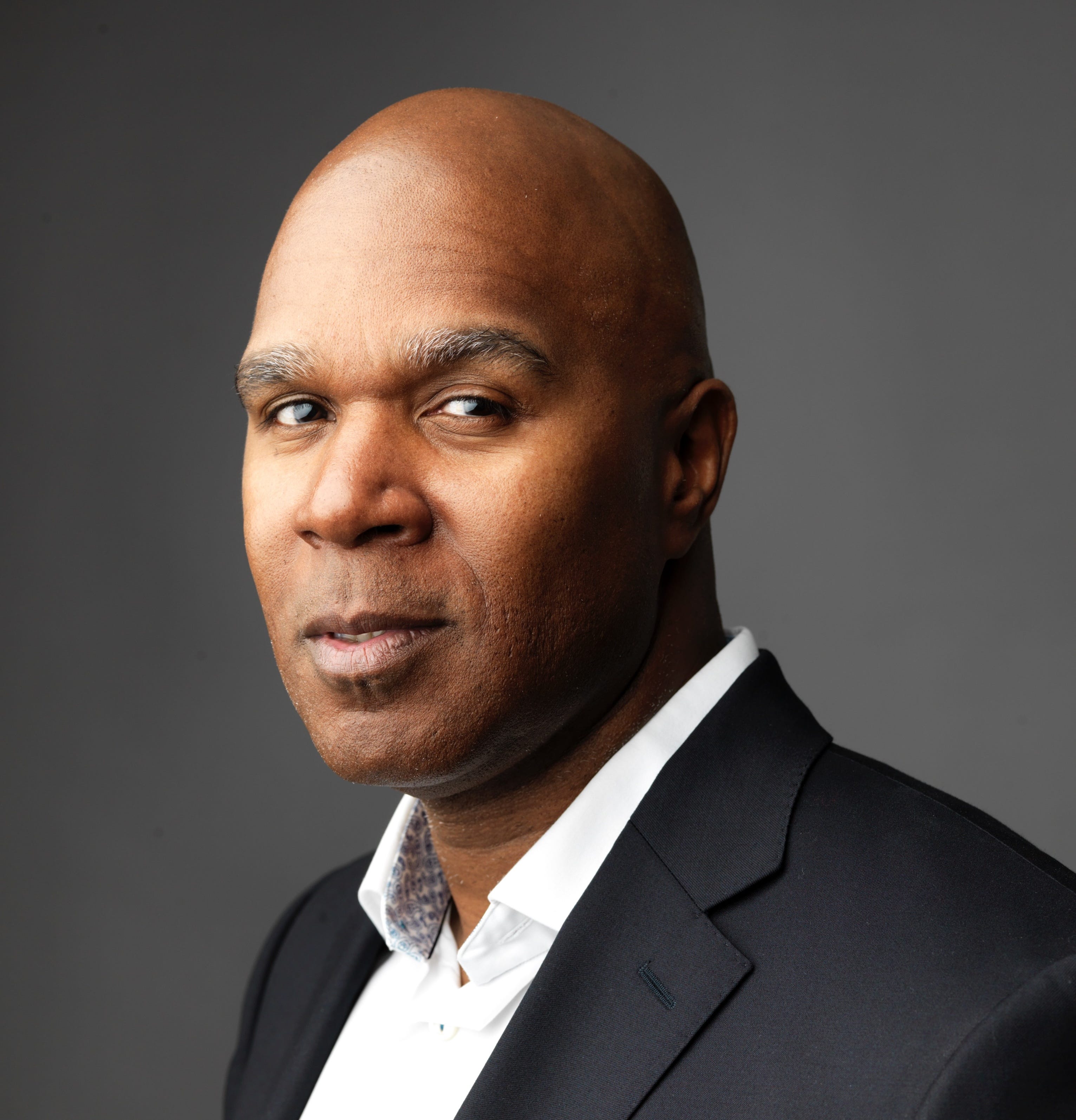
Amri B. Johnson is an inclusion strategist, author, and founder of Inclusion Wins, a global cooperative (based in Basel, Switzerland) that helps organizations build inclusion as a dynamic, adaptive system. With more than two decades of experience in public health, global pharmaceutical leadership, and organizational culture transformation, Amri has dedicated his career to creating environments where people and organizations thrive together.
He is the architect of the Emergent Inclusion Framework, a comprehensive model that equips leaders to move beyond performative DEI efforts toward systemic, sustainable cultural change. Grounded in complexity science and relational leadership, the framework guides organizations in redesigning the conditions through which inclusion naturally emerges—shifting paradigms, strengthening principles, and creating pathways that build relational fitness and social capital at every level.
Amri’s work is both practical and aspirational: he helps leaders design inclusive infrastructure while fostering the mindsets and behaviors that make inclusion real. A sought-after advisor, facilitator, and speaker, he partners with organizations across industries and geographies to co-create cultures rooted in human dignity, shared purpose, and collective flourishing.
He is also the author of Reconstructing Inclusion, a book that challenges conventional DEI narratives and offers a systemic alternative for building cultures where everyone wins. Follow him on LinkedIn and subscribe to his Substack, Reconstructing Inclusion.
DEI per James Brown: Open up the door, I'll get it myself.
Affirmative Action babies (Skip Gates' term) contend that AA was for that generation an opportunity to enter spaces previously closed -- which they did. That there is a reaction against DEI now should not come as a surprise to those who know US history. Nor should anyone be surprised that there was half-stepping and bogus DEI. The seasons change, and now it's again "winter in America" as Gil Scott Heron put it during the Reagan years.
Thanks Amri. I've long been a big fan of FBT and Erec Smith and many writers here. And I want to support almost all you've said. Most is dead right. We move forward together, black, white, Asian, brown etc, recognising the past, merging our traumas, recognising our mutually influencing histories - and then putting organisational capacity, which requires 'requisite diversity' (Ashby, 1957, Cybernetics) before counter-productive zero/negative-sum organisational optics.
But the one glaring omission is the fallacy of Inclusion, which I realise challenges much of your brand. An organisation, to be successful, must have Values. What's in and what's out. For you, Civility and Dignity are such non-negotiables. Therefore you are (legitimately) not Inclusive of those without these Values. So Inclusion is an oxymoron unless you have no Values at all, which is absurd. Such is the level of absurdity and language-definition we have become accustomed to in the antagonistically-named 'DEI'. I noted this when I first saw it in 2020, and it still stands to me. If we want to get to positive, clear outcomes and organisational capability, the term Inclusion has to go - it's totemic of the unclear thinking right at the core of equalities work. Prove me technically wrong by all means, but no-one has dented my argiument here to date. Just no-one has been listening! However, I agree your working definition from Roosevelt Thomas of "No one disputes that organizations need the capability—the skills and capacity—to manage the tensions and complexities that come with any mixture of similarities and differences, remains sound" - provided this Diversity is not more than Ashby's 'requisite diversity'. More diversity than that is diversity for and beyond its own sake and is counter-productive in the end to the org and society.
Hope you see the challenge in the spirit it's intended :). Would love your thoughts...