
On Black “Privilege”
Has my family achieved the American Dream?

Memoir
ON BLACK “PRIVILEGE”
Has my family achieved the American Dream?
An edited transcript of an X thread posted by Isaac J. Bailey
A while back, I promised Tyler Austin Harper I’d deal with the question of “privilege” for black people such as myself. Here it is. But since I’m a college professor, I’ll do it the way I do it for my students. Read this thread and then decide if Halle Bailey (The Little Mermaid) is from a privileged background.
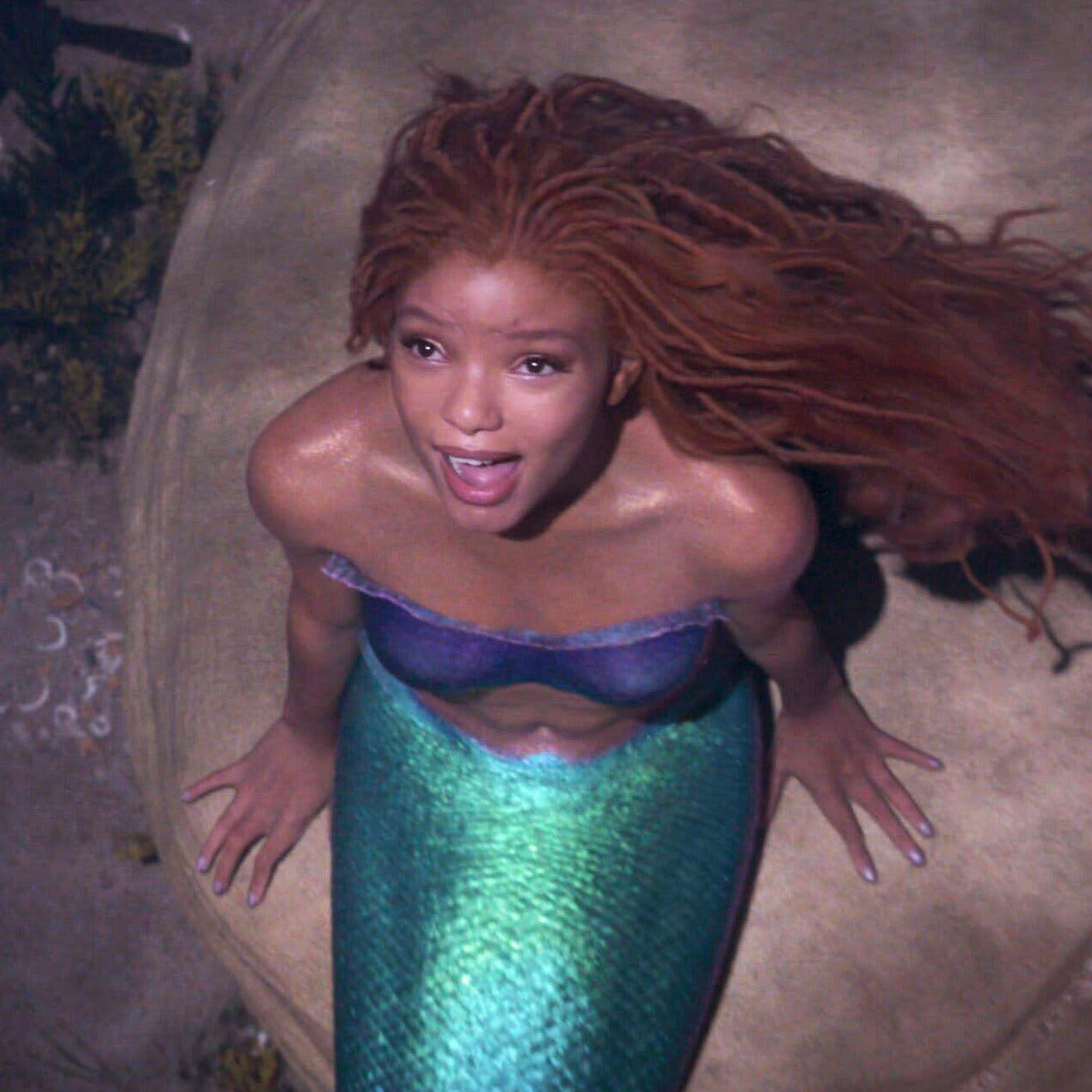
The Little Mermaid, Halle Bailey, is my niece, the youngest daughter of my second-oldest brother Doug who took companies public and was big in real estate before/while managing Halle and her sister Chloe’s careers. Their mom was a head-hunter for some big companies I won’t mention.
Before Chloe and Halle were noticed and got signed by Beyoncé, they were making waves in Atlanta on stage, and via YouTube videos. Doug and I are from St. Stephen, S.C. When I visited them in Atlanta to watch a young Chloe in “The Wiz,” I saw something amazing.
Not only did I see how much physical work it took to be entertainers—it’s amazing the impressive amount of work Chloe and Halle put in even as young girls—it felt like we were a universe away from the house we grew up in, a literal tin can of a single-wide mobile home.
A group of Hispanic men were installing an in-ground pool as we were inside watching Chloe on TV. I can’t tell you how weird that felt. We were on the privileged side of the line. My house in Myrtle Beach was more modest but was still much larger than the one we grew up in St. Stephen.
Doug and I and the rest of our siblings went to rundown underfunded schools that were still highly-segregated decades after Brown v. Board of Education. It was Doug who broke through and went off to a major four-year college, Clemson, where he met Chloe and Halle’s mom.
Before he made that breakthrough, we had to survive a pretty extreme level of poverty, racism (white kids could call my dad the n-word to his face without repercussions), and domestic violence, my dad beating my mom, and our oldest brother going to prison, among other things. We worked hard but food stamps, the WIC program, free lunches at school and during the summer, and Social Security survivors benefits when my dad died kept us from being homeless or starving.
We know our roots go back to at least a woman named Rose Graham Jackson, who was a slave on a plantation in South Carolina not far from where we grew up. My mom was forced at the age of 13 to marry a much older man because her family was too poor to feed her.
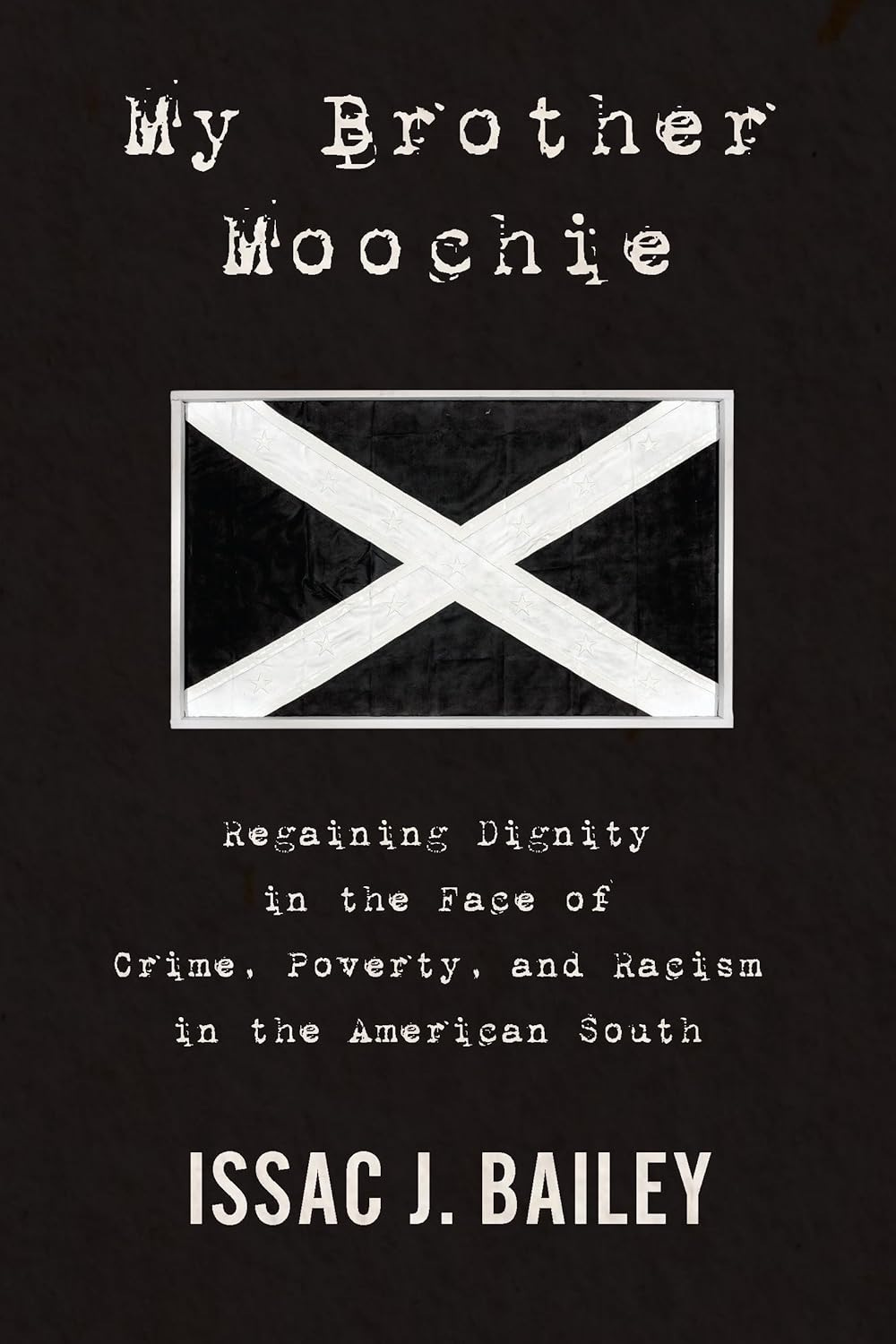
Are we privileged or not? Has the Bailey family achieved the American dream or not? Before you answer, here’s more information. In my first book, My Brother Moochie, you will not see Chloe’s or Halle’s name mentioned once. Why? Well, let me tell you.
As it was becoming clear Chloe and Halle could do something special, some of us were afraid that the sins of the generation before them—my generation—might negatively affect their careers, and we didn’t want that to happen.
I was writing about and researching the tough part of our family history as part of my work as a journalist and teacher. It’s why I hardly mentioned that they were my nieces until in recent years after they had become well established and highly-accomplished young women.
Here’s our reality: I’ve already told you about Doug. Moochie is the oldest of us siblings. He was in the Army but was discharged after mental health issues and migraines…then was given a life sentence for murdering a white man in 1982. There were rumors the KKK would come after us, though they never did.
My oldest sister is Sherry. She was like a second mom. She worked in textiles and other jobs, had some post high-school education and raised a good family. Willie went to Howard University, then was an air traffic controller in DC, where he eventually owned fitness centers.
I came after Willie. As you might know, I’m a journalist and professor. Josh worked in manufacturing, building trucks, and is a conservative protestant pastor. Jody tried his hand in the non-profit world and was a successful car salesman for several years.
Mel is in the technology business and is a stage actor who is helping to raise another of my nieces who lost her mom during a drive-by shooting. Zadoc spent a good bit of time in and out of prison before settling into a stable life as a good father and husband.
Are we privileged? Have we achieved the American dream?
James spent a 16-year-sentence in a prison named after Robert E. Lee for his role in a manslaughter. He was released a couple of years ago—but was shot about a few months ago. He survived and is now back behind bars.
Jordan is the youngest. He's serving a 24-year-sentence in a federal prison for a series of violent crimes, some of which were connected to the drive-by shooting that left one of my nieces without a mother.
During all of this, those of us who “made it” have had to frequently step in to pay bills of family members, to take them into our homes, to stand before judges in courtrooms during criminal trials on their behalf, and so on.
Have we achieved the American dream?
Doug, Willie and I used to pick tobacco and cucumbers as part-time jobs to help my mom keep the lights on even as we studied, played sports and did other activities to build up our resumes for college.
As an undergrad at Davidson College, where I now teach, I’d go home on breaks and help my mom assist drug-addicted homeless people in St. Stephen. That included breaking up bloody fights while my Davidson classmates were on ski trips during their off time.
So, is Halle Bailey from privilege? Has the Bailey family achieved the American dream? Before you answer, you should know that several of us have the hallmarks of health problems that likely stem from what researchers call “toxic stress” and “weathering.”
I don’t have permission to mention what some of my loved ones face, so I’ll just mention mi own challenges. I have a diagnosed PTSD, the auto immune disorder CIDP, a severe stutter that essentially got locked in when Moochie went to prison (I was 9), and now epilepsy.
While there is no “racism test” to definitively say that those conditions came from what we faced most of our early lives, there’s strong evidence that each of them likely has roots in how my immune system reacted to the stress and trauma we faced over years and decades.
The science on that is strong at the macro (group) level, but it is harder to pinpoint at the micro (individual) level. It affects people who grew up like I did, and not just black people, but even poor whites in certain places, the Indigenous, and others.
I am one of the “overcomers” who is privileged enough to teach at a fancy school, has been invited to a couple of Ivy League schools, and doesn’t have to worry about a $400 emergency like most Americans do. But the body never forgets your early life, early trauma.
Even as I’m teaching at a fancy school, I have essentially been working a second job because of all the hospital and doctors’ visits I’ve had to deal with because of health conditions stemming back to the early racism/poverty we endured.
Has the Bailey family achieved the American dream?
My students had trouble answering the question, though they said my nuclear family definitely did because my daughter is a student at a fancy college, my son is a student at the Berklee College of Music in Boston, and my wife holds a doctorate and has a long list of accomplishments.
I also have trouble answering my own question.
I have no problem saying I am now in a privileged position. That’s fact. And, yes, it was cool watching my niece lead a major blockbuster movie that opened No. 1 around the globe, along with Grammy nominations and other awards.
But I have trouble answering the question because it feels as though answering yes or no, we have (or have not) achieved the American dream is far too simple, would sand down the edges of our family experience far too much.
One of the things the scientific research shows is that for black people in particular, those of us so-called “overcomers,” our work ethic has been a double-edged sword. Without it, we would be up shit’s creek. But because of it, our bodies break down much sooner than others.
So, I’ll let you decide. Is Halle Bailey, the Little Mermaid, from privilege? Has the Bailey family achieved the American dream?
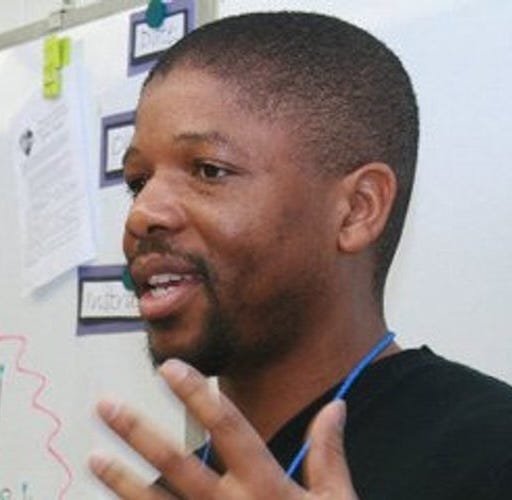
Isaac J. Bailey is Professor of the Practice in Communication Studies at Davidson College.
Absolutely yes, if your privilege is measured against what I assume to be average "white privilege" Your health problems are my health problems mentally for the same reasons you list (childhood bad stuff, really bad) and my husband's work ethic made him the best but he's 45 and has had multiple surgeries to help him keep working his heavy-duty job in a place he has built. We started our marriage stepping over a hole in a trailer to get inside. We have tried very hard and have been able to put our sons in a better position than we had, but we can't quit anytime soon. And, yep. We still get phone calls from family members calling collect. I know you know. It takes so very much to overcome a tough hand of dealt cards. According to what I believe is meant by the American Dream, though it's not all it's cracked up to be some days, you've made it! You're actually doing much better than most. If you are like me, the goal is not to pass down the tough beginnings. Congratulations 🎊
It's interesting how this concept of "privilege" has morphed over the years. When I was growing up in the 80s and 90s, "privilege," as in coming from a "privileged background," referred to those who were at least upper-middle-class and most often referred to the wealthy.
But then, around 2010 or maybe 2012, the concept of "privilege" expanded to include anyone who was "marginalized," most often referring to race and ethnicity (and not class).
I've been in academia for my entire adult life, so I witnessed this shift firsthand. I was able to roll with the changes in these terms, perhaps because I am a Xennial and didn't have super-fixed ideas about the world at that time. But at faculty development workshops on (white) privilege, many of my boomer colleagues were operating with the old sense of the term "privilege" and were very, very confused as a result. This confusion was never addressed during the workshop; it was mistaken for outright resistance to the concept of privilege. I think this is because the younger faculty members leading these workshops were operating with the new sense of "privilege."
Over the years, it seems "privilege" has become a sociological shorthand (at best) and invective (at worst). But I've noticed that my students over the past year or two are less likely to use this term to describe people. I'm not sure if this is a result of the vibe shift or because students are trying to get out of the linguistic box that Gen X and Millennials put them in. (The irony is, is that they are creating another, more kaleidoscopic linguistic box in the process!)
Even as a sociological shorthand, the term "privileged" is vey limiting, a blunt instrument. Too often the idea of privilege is seen as a "you either have it, or you don't" kind of concept, or a way of sorting people into the "good" camp or the "bad" camp. I mean, people see it as an absolute concept, not a relative one.
Bailey's piece is so rhetorical in nature, and I'm not 100% sure of his intentions. Is he deconstructing the concept of "privilege"? Or, is he doubling down on the racial connotations of "privilege"? For me, once you look at the concept of "privilege" on the granular level and how it applies to any one individual, the whole thing breaks down, becomes incoherent, obfuscating. It hides more than it reveals.