

“RACE COMMUNISM” OR RACIAL UPLIFT?
Reflections on Helen Andrews’ essay, the “racial crossroads”
John Albert Washington
Editors’ note: This is the third of several pieces by regular JFBT authors that we are running in response to Helen Andrews’ recent Compact essay, “The Racial Crossroads.” (Here are the first and second pieces.) She argued that America’s post-1960s “racial bargain” is breaking down because it was designed for a mostly white, biracial country and premised on temporary racial preferences that would disappear once racial disparities converged—but demographics have changed and convergence has not occurred.
Her thesis is that the country now faces a choice between restoring equality under the law or accepting permanent, increasingly pervasive racial favoritism across institutions.
She characterizes the latter path as “race communism”: an official ideology in which race functions like class did under communism, legitimating transfers of status, money, and power from disfavored to favored groups.
As a black person who has lived deeply within the black world both before and after the Civil Rights Movement, I strongly suspect Helen Andrews’ essay in Compact, “The Racial Crossroads,” would have been very different had the black community heeded the warnings of the 1965 Moynihan Report and made the necessary adjustments. A stronger family structure would, I believe, have allowed us to send into the world better-socialized and better-prepared young people capable of taking fuller advantage of the extraordinary opportunities opened by the Johnson administration and the civil-rights reforms of the 1960s.
When the family weakened, so did one of the principal institutions through which children acquire discipline, aspiration, and the habits necessary to seize opportunity. Had the black family remained stronger, I suspect many of the disparities Andrews points to today would be substantially smaller, and some might not exist at all. We had the warning.
At first, I thought I had found an ally in Andrews because of her criticism of Ibram X. Kendi. Though Kendi belongs to a much more recent generation, his thinking represents the kind of response that too often greeted Moynihan’s warning: an eagerness to interpret racial disparities primarily as evidence of racism while giving insufficient attention to deterioration within the black family—the most fundamental institution of any community. As I continued reading Andrews, however, I realized that while we share some ideas, our larger arguments ultimately diverge.
Government could open doors, but it could not guarantee that every individual or community would be equally prepared to walk through them. In my view, the weakening of the black family played a major role in limiting our ability to capitalize fully on the new opportunities, and some responsibility for that failure must be confronted within black America itself.
The failure to achieve equal outcomes, therefore, does not prove that the civil-rights legislation failed, as Andrews implies. It may instead demonstrate that removing external barriers, indispensable though that was, could never substitute for strong black families and well-functioning black communities.
I also disagree with her demographic argument. Her suggestion of an emerging nonwhite alignment against whites strikes me as considerably exaggerated. She sometimes treats the increasing nonwhite share of the population as though it was becoming a cohesive coalition of racial beneficiaries arrayed against whites. But the evidence suggests something far more complicated.
The 2024 presidential election illustrates the point. Donald Trump received 48 percent of the Hispanic vote, 40 percent of the Asian vote, and 15 percent of the black vote. Harris still won majorities of all three groups, especially black voters, but these results reveal substantial political differences rather than an automatic nonwhite voting bloc. The differences become even more apparent among Hispanic men, who voted 54 percent for Trump.
Black, Hispanic, Asian, Native American, and multiracial Americans have different histories, economic positions, political priorities, and relationships with government. And tensions also exist among these groups, so treating them as a single class of racial beneficiaries obscures those differences.
Asian Americans especially complicate Andrews’ picture of a unified nonwhite coalition. Some Asian Americans have themselves challenged race-conscious preferences, particularly in college admissions, as discriminatory against them, much as whites have done. Nonwhite, therefore, does not automatically mean political solidarity on racial policy.
The history of affirmative action further complicates any simple whites-versus-nonwhites narrative because women were also beneficiaries of sex-conscious affirmative-action policies, and that included millions of white women. Their importance to this discussion is especially notable given their large population and comparatively high levels of educational attainment (see Table 1).
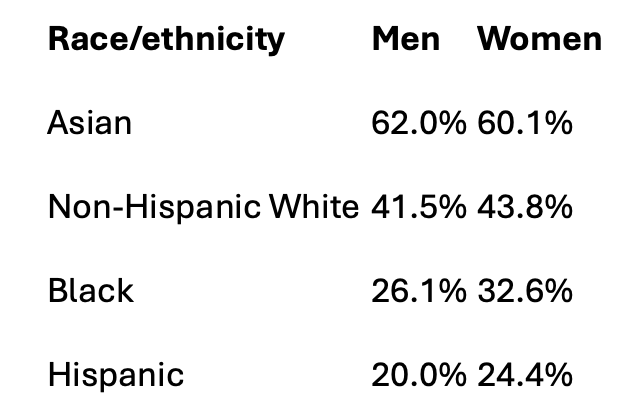
These figures do not prove that white women received most affirmative-action benefits. They do show, however, why it is misleading to portray affirmative action simply as a transfer of opportunity from whites to nonwhites. Sex-based affirmative action potentially encompassed a very large population of white women in addition to nonwhite women.
This brings me to Andrews’ provocative formulation of “race communism.” I do not believe the comparison between Soviet communism and American affirmative action is particularly useful. The terminology also has a historical resonance that makes me uneasy. When conservatives invoke “communism” to describe domestic political opponents, I cannot help thinking of the Red Scare and the excesses associated with Joseph McCarthy. As such, I don’t think the comparison is sound, as it projects an urgency that isn’t there.
Andrews’ prediction of an inexorably expanding racial-preference regime also seems harder to sustain in light of the dramatic movement in recent years toward formal race neutrality in federal policy in the Trump Administration.
Here, too, I find myself disagreeing with both sides. At the same time that I am critical of permanent racial preferences, I cannot shake the sense that some of the Trump administration’s policies are aimed at turning the clock back toward the pre–civil rights era. To me, the slogan “Make America Great Again” inevitably raises the question: great at what point, and for whom?
As someone who was actually in early adulthood when many of these admittedly flawed programs were created, I remember conservative opposition differently from the benevolent explanation sometimes offered today. It was very obvious to me at that time that conservative opposition to these programs derived precisely from the fact that conservatives thought, as did liberals, that they would expand opportunities for black Americans. Whatever arguments are made today, many of us did not experience that opposition at the time as a benevolent effort to improve our condition.
Nor does the post–civil-rights history fit neatly into a story of liberalism endlessly expanding government dependency. A major counterexample came from a Democratic president. Bill Clinton’s welfare-reform effort dramatically reduced the welfare rolls; according to the Clinton White House archive, welfare caseloads fell about 60 percent between January 1993 and June 2000. That history deserves a place in any serious discussion of liberalism, welfare, responsibility, and reform.
All of this brings me back to what I regard as the central issue. Nearly sixty years after the great victories of the Civil Rights Movement, we blacks must increasingly ask ourselves: When do we stop looking primarily to outside institutions for rescue and make self-reliance the organizing principle of our own advancement? And when will we tire of having the finger pointed at us?
That does not mean pretending racism has disappeared or abandoning laws against discrimination. It means recognizing that no government program can perform the work of families, parents, churches, neighborhoods, and individuals themselves.
For that reason, I believe the most urgent project before black America is reconstructing the black family through a serious national movement—one centered on marriage, responsible parenthood, education, discipline, and self-reliance. The civil-rights generation fought successfully to open the doors. Our responsibility now is to build families and communities capable of walking confidently through them.
Without that reconstruction, I fear we will still be debating the same disparities another sixty years from now.
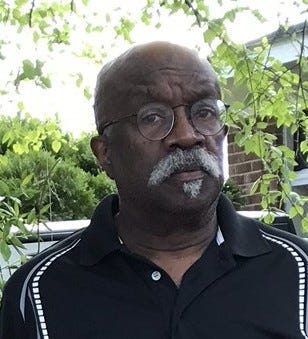
John Albert Washington is an octogenarian who has earned his daily bread, first, as an Army paratrooper and then, later in civilian life, as a computer support technician, two careers from which he has now achieved a double retirement. In and around these occupations, he fed his family with janitorial work, factory labor, and long-haul trucking, while also managing the completion of 2 years of college during the journey. Though he is not academically credentialed, he feels his short school life expanded his ability to think broadly and enhanced his analytical thinking skills. As a center-left liberal, he holds firmly that values like family commitment, self-sufficiency, and personal responsibility are not merely conservative but also deeply liberal ideals. He has published in Quillette and has several previous articles in the Journal of Free Black Thought: “Black Culture and the Euro-American Collective Brain,” “Blaming Racism Won’t Cut It,” “The Unraveling of the Black Family,” “The Brother War,” “‘Uplift Suasion’ vs. Dysfunctional Black Behavior,” “Pathways to Manhood: The Military vs. the Gang,” “The Truth Is in the Mirror,” “The Vote My Grandfather Never Had,” and “America’s 250th Anniversary.” He lives in Fayetteville, North Carolina.
You are a shining example of the falsity of the socialist narrative; in their view, because you are oppressed by me, you cannot possibly achieve anything and must be taken care of by the state at my expense.
The reality is, you could buy or sell me. You were an Army paratrooper, I never served. You have two pensions, and I have none. Their stereotypes and lies are an insult to you and the many other people like you who have achieved so much in life, given such strong headwinds. Thank you for your service, and thank you for writing and sharing these realities with the ignorant socialists of America.
Mr Washington, I really like your commentary! I can only add that you be very wary of some of the supporters on this Substack channel. FBT seems to draw those who don’t see the persistence of racism in the US and how it must be engaged, even as clear thinking Brothers like you and me labor deliver our families and communities from self inflicted wounds!