

BLINDED BY COLOUR-BLINDNESS
An alternative way of being black
Two years ago, I published an essay in this journal, “Blinded By Colour: The Irish Case for Transcending Race,” which examined whether there was any utility in relying on “race” as a heuristic to understand people and guide human relations. My thesis was that a person’s race can only tell us so much about who they are and how they experience life, therefore we should only resort to it for descriptive help in limited circumstances. I used the analogy of the man who meets a non-national at an airport and tries to introduce himself in a way that provides the clearest picture of who he is. If he describes himself as black and Irish, that would certainly tell a deep story, I admitted, but if he communicates that he is Nigerian-Irish, the story is significantly deepened. This is because the label “Nigerian” holds more descriptive power than the label “black.” One descriptor tells a tale of his cultural and traditional identity whilst the other describes a phenotype that might (but, might not) imply certain experiential truths. A black, single mother without formal education, living in a council estate, is materially disadvantaged, sure; but what about the black daughters of Barack Obama? The examples abound.
I still hold the above to be true. That being said, my mind has changed on the question of how much importance “race” carries. What spurred this change is the follow-on question of who gets to determine when and how race carries importance. If there has been enough of a “democratic buy-in” (defined below) to the concept of race, why should anyone get to invalidate the proximity another feels with the concept unless it is causing others material harm?
This is a very difficult subject to broach in our modern age. One that creates more questions than answers: if Beyoncé can help spearhead a musical called Black is King, why can’t the MAGA rapper Tom MacDonald declare sympathy for straight white males in his song—Straight White Male? Why is Erika Kirk wrong for her poignant plea against the disenfranchisement of young men—especially “white, young, male, men,” while Tupac gets away with rapping “every woman in America, especially black, bear with me, can’t you see?—that we (young black males) are under attack” in his heavily racialised song White Man’z World. To advocates of “moving past race” (or “colour-blind” theorists) there is an easy fix for this: none of the above should prevail or be encouraged in modern society.
Through this “raceless” or colour-blind lens, Tupac’s bars are just as bothersome as Tom MacDonald’s, as the aim for society should be to deemphasise the salience of race, rather than amplify it. Most colour-blind types would surely agree that Tupac’s intention in invoking race is different from Tom MacDonald’s, and that his intentions might even be more understandable given the circumstances. The colour-blind might also argue that for social cohesion to be achieved, race should only be invoked negatively (for example, to denounce racism), never positively (to declare pride in it). The former, they would claim, helps bring us closer to the ideal of race-blind harmony whereas the latter maintains the racialised reality that makes racism possible.
My first essay was slightly more sympathetic to this position, with some caveats; this essay, on the other hand, represents my departure from this line of thought on the basis of two concepts: practical utility and the term I coined above, democratic buy-in. In this piece, I will also briefly deal with the subject of racial pride and why I believe expressions of pride in “whiteness” by an Erika Kirk cannot be likened to the pride in her “blackness” that a Beyoncé might express.
To begin with, it’s important to define key terms. When I say colour-blind I am referring to the definition popularised by Coleman Hughes, who is probably the most well-known contemporary proponent of the idea. Rather than supporting the Karen-esque “I don’t see colour” cliché, what Hughes says is that the term “colour-blind” should not be interpreted literally but rather purposively. When one calls another “warm-hearted” they do not refer to the temperature of their heart but are poetically implying something charitable about their personality. Ergo, “colour-blindness” poetically implies an aspiration to treat people—in daily life and especially in public policy—without regard to race.
By democratic buy-in I mean the widespread embrace of a concept that creates no obvious harm. This definitionally escapes the “tyranny of the majority” problem in that any legitimacy which arises from democratic buy-in requires that the idea bought into does not cause obvious adverse effects for people. For example, the en-masse adoption of antisemitism would not be described as democratic buy-in as this leads to obvious harm for Jews, whereas large hordes of people claiming divinely-inspired reverence for Taylor Swift could fall under the definition (though the question of harm here might be up for debate).
Lastly, practical utility means what it says on the tin, i.e., that an idea serves a functional purpose of some value. For example, in corporate law, there is a widely held presumption that companies have their own legal personality, meaning they can sue or be sued, owe debt, and be criminally penalised. This does not mean they have an actual personality, but we entertain the legal fiction for the practical utility it offers in corporate and legal contexts. Thus, though race may not be real in a biological sense, and though its conception may have been rooted in oppressive, harmful motives, the maintenance of the concept may nonetheless serve a useful purpose today that is disconnected from harm and detached from oppression in some circumstances.
My argument, then, is that “blackness” has achieved so much democratic buy-in and shown so much practical utility that it would be counterproductive to try to invalidate it or erase it as an identity to build community around. Furthermore, I reject the colour-blind thesis that blackness should not be viewed as an important part of somebody’s identity.
There is a fine point of nuance here. I, Eric Ehigie, may in my private life choose not to see race as an important aspect of my identity or of the identity of another, while I still maintain that, in my social relations, I am not justified in dictating that somebody else should not view their blackness as important. I am not making the case for racial essentialism (claiming that one should assume a person’s race implies unproven characteristics) nor racial supremacy. My argument is based on the premise that blackness has had such a lifespan, such an evolution in its meaning, that to deprive those who have attempted to positively redefine blackness the feelings of community that arise from those efforts is both insensitive but more importantly, unsustainable.
The go-to figure that supporters of colour-blindness invoke is Martin Luther King Jr. Heck, I referenced him in my original essay! He is a compelling figure in this context due to the universalist values he proudly promoted. On economic policy, he didn’t only speak to the plight of the black poor but to the conditions of the working class across racial backgrounds; on identity, he denounced all forms of supremacy, whether it privileged black or white; and his famous ‘dream’ was of an America where all races “sit down together around the table of brotherhood.”
Despite all of this, King recognised that many of the depictions of phenotypic blackness, the conditions surrounding black life, and the connotations associated with being black in popular culture were negative. He saw how this had a detrimental impact on the self-image and confidence of many black people, and appreciated the need, not to move away from racial identification and embrace colour-blindness, but to help positively redefine blackness in a way that inspired self-worth and pride amongst black people.
In a 1967 speech, King is quoted as stating “I’m black, but I’m black and beautiful…this self-affirmation is the black man’s need, made compelling by the white man’s crimes against him.” In another speech, King says “somebody told a lie one day…they made everything black ugly and evil. Look in your dictionary and see the synonyms of the word black, it is always something low, degrading, and sinister…. Look at the word white, it’s always something pure, high.” He goes on to say “I want to get the language right tonight…so right that everybody here will cry out ‘yes I am black and proud of it, I am black and beautiful.’” This is a vital part of King’s message, often missed by colour-blind theorists who take him as the patron saint of their philosophy: The necessity of racial redefinition for many black people is based on feelings of inferiority and worthlessness stemming from society’s prejudicial characterization of ‘blackness’ as pathology, rather than as, in fact, indifferent.
In my own case, I recall moments in my upbringing where I was called racial slurs out on the estate, or was met with stereotypes in school, and how a pernicious self-hatred enveloped me before I learned to take pride in who I was, including my blackness. Subsequently, I’ve built community with people who can deeply relate to this experience, and who would now say they are proud to be black—as an act of defiant self-love, if nothing else. Thus, it feels remiss for anyone to ask a person to abandon whatever their positive redefinition of blackness represents to them (and the shared bond curated with others on this basis) out of a concern that this might divert from a colour-blind aspiration.
As demonstrated by popular movements to help imbue blackness with a positive meaning—in contrast to the negative qualities ascribed to it throughout recent history—there is undoubtedly democratic buy-in to the idea that blackness is something worthy of pride. And the practical utility it offers is evident from various initiatives, including media platforms such as Black Entertainment Television (BET) in the USA, the Music of Black Origin Awards (MOBOs) in the United Kingdom, and the advocacy group, Black and Irish, here in Ireland.
A culture that many call “black culture” has developed from these efforts to reappropriate the meaning of blackness. It is a capacious concept that seems to take on different meanings depending on the national context, and is somewhat of a misnomer in that not every black person has to, nor indeed does, buy into it. Nonetheless, it points to something real. The slang, music, and fashion of black England have been heavily shaped by Windrush generation immigrants from the Caribbean and immigrants from Africa who shared a common struggle to integrate against the backdrop of xenophobia and a colonial past. This is different from the development of black culture in the USA, which is in turn different from its development elsewhere. And yet in every case, we see that distinctive cultures arise in diasporic black communities.
Does the ascendance of this black culture yield racial division? If anything, contributions from this cultural well have only enriched the countries in which they have taken place, and rather than yielding division among racial communities, have acted at times as a glue to bind them—Stormzy’s performance at Glastonbury being but one example! The colour-blind would say this “black culture” phenomenon is more fittingly described as the consequence of cultural enmeshment formed by various ethnic groups, rather than the product of anything overtly “racial,” but to many participants in the creation of this cultural phenomenon, blackness is an unavoidable component.
The next question to answer is why I switched to speak of “blackness” rather than “race” writ large. Surely, one might argue, it is hypocritical to claim that black people can non-harmfully share in feelings of racial pride but when someone such as Erika Kirk feels White American racial pride, it is problematic. I stand behind this non-consistency on the grounds that the historical dimension of black racial pride makes it qualify as democratic buy-in and gives it a practical utility that will not typically characterize majoritarian racial pride. Crucial to my argument is the belief that there is a fundamental difference between racial pride that arises as a response to prolonged race-based mistreatment, as opposed to racial pride that exists to maintain racial supremacy (for example, the Ku Klux Klan, for whom racial supremacist ideology is sine qua non to their existence). Pride in the experience of overcoming associated with one’s race can be harmless and indeed beneficial in cases like the former. It represents not essentialism or supremacism but a celebration of overcoming the race-based struggles faced by an individual and their community. Pernicious essentialist or supremacist pride has certainly arisen in response to racial maltreatment, as in cases like black nationalism and black separatism. However, I, like King, do not grant any room for this nor do I see racial oppression as an excuse for this mode of thinking (no offence to Dr. Umar!).
This is still a thorny issue, and my treatment of it is no doubt incomplete, as I haven’t dealt with discrimination faced by various other groups, such as brown people, or Jews (some of whom are Caucasian-presenting, to make things more difficult!), however this framework can be developed to make room for these groups given the fact that the pride they may feel also may arise from overcoming oppression connected to an immutable characteristic. In the name of principal consistency, it must be stated that if after a significant period of time, these minoritarian racial categories take on a different meaning—with a once-oppressed group now able to foster a non-harmful pride becoming powerful enough to perpetrate supremacist racial oppression—then what qualifies as democratic buy-in would shift accordingly.
The looming question is whether racial togetherness can subsist in a society where historically oppressed racial groups participate in group-specific racial solidarity as the development of a racialised culture around this solidarity takes place. My answer to this is—absolutely! There have been many great thinkers, activists, musicians, and figures from various other fields, who devoted their work to the sustenance of black culture whilst maintaining the belief that all humans are created equal and that ultimately, solidarity among humankind takes precedence over all else. We see this in Black Panther leader Fred Hampton’s emphasis on a ‘rainbow coalition’ of the working class, in the poetry of Benjamin Zephaniah, who expressed racial solidarity while operating as an agent of unity for peoples from all backgrounds, and most markedly, the various interracial marriages that have existed involving advocates of black pride.
Maya Angelou, whose poem “Still I Rise” in many ways demarcates the distinguishing quality of black culture—”Bringing the gifts that my ancestors gave / I am the dream and the hope of the slave / I rise”—married a white man, twice! David Lammy, the black-British parliamentarian declared on radio, “I am very comfortable with saying I am Black, British…and I am very very proud…”, and has been married for over two decades to the white British artist and historian, Nicola Green.
Race is but a coincidence, I am sure, in the context of these relationships, while serving as an important part of the identities of those whose race has been the subject of pain and ridicule in their lives, and in history. This ambiguity, flexibility and context-switching is a product of our modern world. Rather than run from it by trying to police black pride, we should aim to adapt to its existence and ensure that it continues to possess a positive character that allows all of us, of any color, to unite across our cultural diversity. Dreaming of racelessness or attempting to reduce race to unimportance are quixotic endeavors. We must instead meet the world as it is.
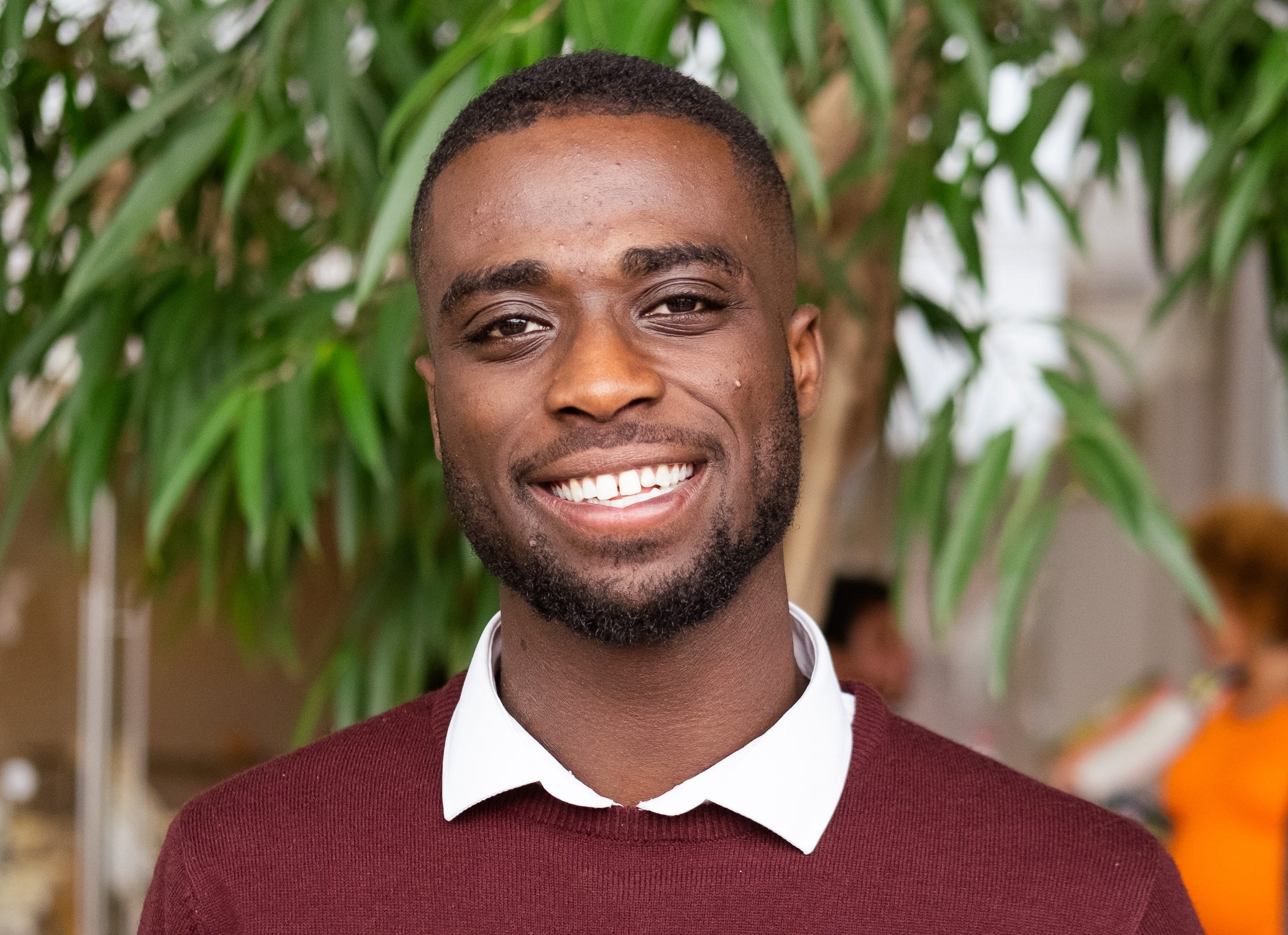
Eric Ehigie is a Nigerian Irish lawyer-in-training, with an undergraduate Law degree from the University of Galway and a Master of Public Policy from the Blavatnik School of Government, University of Oxford. He writes on sociopolitical and cultural issues for his Substack and publishes similarly themed content for his YouTube channel. Named as one of BBC 1Xtra’s Black History Month Future Figures, Eric aims to use his social commentary to propose evidence-based methods that will assist Ireland in embracing its newfound cultural heterogeneity and in achieving social cohesion in the face of identitarian differences. His previous essay for JFBT was “Blinded By Colour: The Irish Case for Transcending Race.” He appeared on the Free Black Thought Podcast two days ago in an episode titled “African-Irish.” Follow Eric on Instagram, his YouTube channel and his Podcast.
I would just like to stress one facet that is alluded to here, but not much explored. Accomplishment.
Rather than stress where you were born or what you were born with, examine what you have done with it. I don't think I'm weird when I say that I have only a little interest in a person's race, religion, ethnicity, etc. I care about these, but what have they DONE?
Doctor, auto mechanic., plumber, painter, scientist, etc. I want to hear about what a person has done with their life. Race, religion, ethnicity are efforts to find commonality. I want to find out what makes a person unique.
Ehigie makes a useful contribution to the identity discussion. My concern, when we go down this path for those in the United States, is the narrowing of it to 'black' and 'white.' The wider discussion includes Native Americans and Asians. I believe Ehigie would embrace the multi-faceted 'race'/ color approach. He could say I'm simply doing whataboutism. True, in part. But if we're searching for the big picture, the individual nuance in the 'system', then we might do well to say, 'Yes, we're trapped in this dilemma but from different roots, different mindsets, different 'solutions.' Sorry for all those scare quotes, but these words are loaded with different weights.