
American Excellence
Introducing the Omni-American story

Event transcript and recording
AMERICAN EXCELLENCE
Introducing the Omni-American story
Greg Thomas and Aryeh Tepper
Towards the end of 2024, the Omni-American Future Project hosted a sold-out concert at Ginny’s Supper Club in Harlem, “American Excellence.” The gala concert featured celebrated pianist Emmet Cohen and his trio with special guests Coleman Hughes on trombone and Itamar Borochov on trumpet. During the course of the evening, Emmet was honored with the Omni-American Young Leaders Award, while American renaissance man Roy Niederhoffer was presented with the Albert Murray Award for Omni-American Excellence.

The concert, however, was not only musical. Co-Directors of the Omni-American Future Project, Greg Thomas and Aryeh Tepper, wove thought-vignettes around and in between the songs that embedded the music in a larger story reflecting the beauty and depth of American identity and culture: the Omni-American story.
The video-essay below features Thomas and Tepper’s thought-vignettes as text, followed by videos of the musical performances.
Opening: What is the Omni-American story?
Published in 1970, The Omni-Americans was Albert Murray’s groundbreaking book written from the elevated perspective of his Harlem apartment. Refusing to get hung up on shallow distinctions, Murray insisted that “for all their traditional antagonisms and obvious differences, the so-called black people and the so-called white people of the United States resemble nobody else in the world as much as they resemble each other.”
“Black” or “white,” Jewish, Muslim or Christian, left or right, Republican, Independent or Democrat, Americans are a diverse but distinct people. Omni means “all,” but it represents the many who are also one. Hence, Omni-Americans. Setting divisions aside, including real divisions over policy, Murray invited all Americans to reject the path of resentment and to cultivate a heroic approach to life. Murray was a music lover, and he showed how the blues and “the “fully-orchestrated blues statement,” jazz, are American-born art forms that stylize and transmit a joyful, resilient, romantic, playful, and heroic sense of life.
The Omni-American story is the story of this deeply human and deeply American sense of life, and its transmission to us.
How is a heroic sense of life stylized and transmitted in rhythm and tune? Well, that’s part of what we’ll be discovering here, shedding light on the blues-idiom wisdom stylized and transmitted in this wonderful music. In the meantime the band, featuring Emmet Cohen on piano, Joe Farnsworth on drums, and Yasushi Nakamura on bass, will get us started with an original tune from Emmet’s latest album, Vibe Provider: “The Lion.” (Stop the video at the end of the tune; we’ll have the next one cued up for you below.)
Emmet Cohen, “The Lion,” played by the Emmet Cohen Trio
Br’er Rabbit and “Cottontail”
The song we just heard, “The Lion,” was written with the vibe of the great stride piano master from the early years of jazz, Willie “the Lion” Smith, in mind. Smith was an Afro-American who loved Jewish thought and traditions. He embodied a key aspect of the Omni-American Future Project: a revitalized and strengthened Black American and Jewish collaboration inspired by the virtue of resilience.
The song we’re about to hear, Duke Ellington’s “Cottontail,” based on George Gershwin’s “I Got Rhythm,” celebrates resilience. The song extends the Br’er Rabbit folktales from the Afro-American tradition. Albert Murray liked to say that Br’er Rabbit was born and bred in the briar patch. After all, that’s where he learned to outwit stronger opponents with the kind of skill and finesse that we will hear now from Emmet Cohen and the band, with special guest artist Itamar Borochov on trumpet.
Duke Ellington’s “Cottontail,” played by the Emmet Cohen Trio with Itamar Borochov
The Ballad Tradition
That was Itamar Borochov with Emmet Cohen and his trio on Duke Ellington’s “Cottontail.” Notice how the tempos of a song can reflect a mood. In what we just heard, the tempo was brisk and exciting.
Another tradition in American jazz is the ballad, taken at a slower tempo for depth of emotional expression. The song we’ll hear now, “Laura,” was written by David Raksin in 1944 and represents a great example in the American Songbook ballad tradition. For this tune, Emmet Cohen will be joined by Coleman Hughes on trombone.
A practice in jazz is sharing the lyrics before playing the ballad. These are the lyrics to “Laura”:
Laura is the face in the misty light
Footsteps that you hear down the hall
The laugh that floats on a summer night
That you can never quite recall
And you see Laura on the train that is passing through
Those eyes, how familiar they seem
She gave your very first kiss to you
That was Laura, but she’s only a dream
David Raksin’s “Laura,” played by the Emmet Cohen Trio with Coleman Hughes
Stomping the Blues
The next song is a blues. It’s fair to assume that most everyone reading this has heard of the blues. But sometimes there’s confusion, because there are actually two kinds of blues. There is the blues feeling, and there is blues music.
The two—feeling blue, and blues music—are connected, but distinct.
The blues feeling is a bad feeling. The feeling after bad things just happened, or the feeling that bad things are about to happen. There’s anxiety mixed with fear, and even pain.
Blues music—“the blues”—is the music that you play to get rid of that feeling. Blues music is the sound of the soul asserting its right to triumph over that bad feeling. The blues faces the challenge—sometimes by naming the pain in the lyrics, but also through the cries, moans, and blue notes in purely instrumental blues or jazz. But no matter the musical tool, we stomp the blues without resentment, joyfully. It feels good.
Blues music stylizes a heroic sense of life; it is American blues-idiom wisdom transmitted in rhythm and tune. And here is the Emmet Cohen Trio, with guests Itamar Borochov and Coleman Hughes, playing the blues.
“Blues” by the Emmet Cohen Trio with Itamar Borochov and Coleman Hughes
Swinging Through The Changes
In the previous vignette, we noted how blues music stylizes a heroic sense of life. Blues music stomps the blues feeling.
But blues-idiom wisdom goes even further. Once we become aware of our capacity to stomp the blues, we don’t just survive, we strive to thrive in difficult circumstances. After all, the hero requires the dragon to become a hero. So, we welcome obstacles in the spirit of “antagonistic cooperation” and, with grace under pressure, improvise with skill in real time.
Albert Murray called improvisation “the ultimate heroic endowment.” The next song, composed in 1954 by jazz saxophonist Sonny Rollins, “Airegin,” is a jazz standard with ample room for improvisation. When you hear the soloists flowing through what musicians call “the changes,” imagine the hero improvising in real time. The changes literally refer to the harmonic chord changes, but within the blues-idiom tradition, we’re talking about changes, period. Changes in life come quickly at times; the question is—can you improvise, swinging through the changes with grace, gratitude, and joyful strength?
If so, then you’re good to go.
Sonny Rollins’ “Airegin,” played by the Emmet Cohen Trio with Itamar Borochov and Coleman Hughes
Psalms 133: Hinei Ma Tov
The next song musically extends and elaborates a popular Jewish folk song, Hinei Ma Tov. The title is a Hebrew phrase taken from the opening of Psalms 133, “Behold how good and pleasant it is when brothers sit together.”
There is a great version of the song on Emmet Cohen’s album Vibe Provider. This is yet another beautiful aspect of Omni-American, blues-idiom wisdom. If you aim to stomp the blues and to swing with the changes, then it’s gotta be you. From your home to your community, bring who you are. Just make it swing.
Speaking of swing, please welcome to the bandstand Roy Niederhoffer, our senior awardee and resident renaissance man, to join the band on violin for Hinei Ma Tov.
“Hinei Ma Tov,” played by the Emmet Cohen Trio with Roy Niederhoffer on violin
The Break
Our closing number is a well-known tune, Dizzy Gillespie’s “A Night in Tunisia.” One of the distinctive features of the song is what’s called the “break,” when the band drops out and a single musician carries the song over to the other side.
Albert Murray loved the word “break.” He heard opportunity in the word, as in: I’m trying to catch a break. In Omni-American blues-idiom wisdom, the break is an opportunity, because sometimes the pressure really gets intense and we’re not faced with changes, but collapse. A crisis in which there’s nothing and no one to rely on... What do you do then?
This is the moment when the hero, alone, finds the strength to keep the music playing, even when the world outside is silent, gone.
Turning a break into an opportunity can earn a person distinction. People still talk about Charlie Parker’s flight of the imagination over the break in a historic 1946 recording of “A Night in Tunisia.” We’ll hear what Itamar Borochov on trumpet, Coleman Hughes on trombone, Yasushi Nakamura on bass, Joe Farnsworth on drums and Emmet Cohen on piano will do with the tune as they take us home:
Dizzy Gillespie’s “A Night in Tunisia,” played by the Emmet Cohen Trio with Itamar Borochov and Coleman Hughes
Conclusion: Celebrating American Excellence
We’ve come to the end of our evening. Thank you to the artists: the Emmet Cohen Trio—Emmet, Joe Farnsworth, and Yasushi Nakamura—and special guests Itamar Borochov and Coleman Hughes. Congratulations again to our honorees, Emmet Cohen and Roy Niederhoffer.
We hope you have enjoyed the aesthetic, intellectual and soulful journey through “American Excellence,” an Omni-American experience transmitted on an elevated musical plane where human excellence is celebrated, no matter the source.
Special thanks to all those who made this event and video-essay possible: Jake Mackey and the Journal of Free Black Thought, Roy Niederhoffer, Adam Beren and Sacha Roytman of CAM, the Combat Antisemitism Movement, Duane Hughes and all who purchased tickets and tables to our gala celebration, the Jazz Leadership Project, and the American Sephardi Federation.
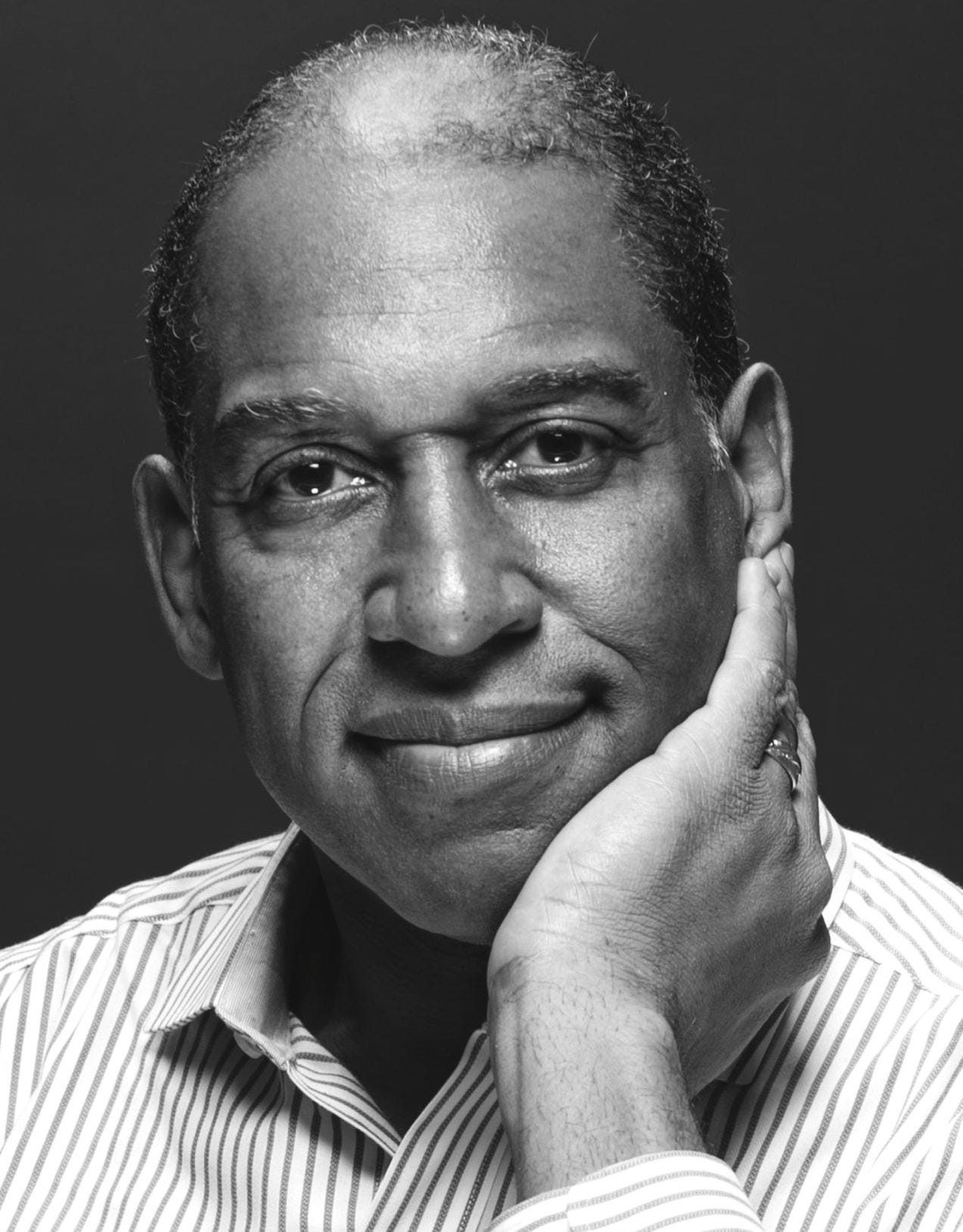
Greg Thomas is CEO of the Jazz Leadership Project, a firm that uses the principles and practices of jazz music to enhance leadership success and team excellence in organizations such as JPMorgan Chase, Verizon, Center for Policing Equity, TD Bank, and Google. He is Co-Director of the Omni-American Future Project and Co-Editor of The Omni-American Review. In October 2021, he co-produced the two-day broadcast, "Combating Racism and Antisemitism Together: Shaping an Omni-American Future," which may be viewed here and here. He blogs at Tune In To Leadership, where a version of this essay originally appeared. He co-authored Reimagining American Identity with his partner, Jewel Kinch-Thomas, and Amiel Handelsman. He is currently working on his memoir, The Making of An Omni-American: My Journey from Race to Culture to Cosmos. He publishes regularly in the Journal of Free Black Thought where his articles and interviews include “Jazz, the Omni-American Ideal, and a Future Beyond Bigotry,” “Reimagining American Identity,” “Can Civic Jazz Resolve the American Dilemma?,” “Deracialization Now,” “Why Did Trump Prevail Again?,” and on the FBT Podcast “Not Black but Café au lait.”

Aryeh Tepper is the Co-Director of the Omni-American Future Project and the Co-Editor of The Omni-American Review. He also serves as the Director of Publications for the American Sephardi Federation, where he edits Sephardi Ideas Monthly and Sephardi World Weekly. Aryeh is the author of Progressive Minds, Conservative Politics: Leo Strauss' Later Writings on Maimonides (SUNY Press, 2013). His writings on the intersection of political philosophy and music include “Leo Strauss, Bigotry and the Blues” (Moment Magazine, 2021), “Albert Murray, Philosopher of Jazz,” (The Weekly Standard, 2016), and “The Problematic Power of Musical Instruments in the Bible” (Interpretation, Vol. 41:2-3, 2014-15). Aryeh has lectured on music at The Columbia University Center for Jazz Studies, The National Jazz Museum in Harlem, The University of Arizona, Princeton University, Ben Gurion University and the Mizpeh Ramon Jazz Conservatory. His previous publication in the Journal of Free Black Thought was “Introduction to ‘The Omni-American Review.’”
Thank you. I loved reading this today. Keep fighting the good fight
Wonderful! Music has always been universal, glue to humanity's disturbing tendency to dissolve and dillute. But I have always had an aversion to buzz words, those attempts to reclassify and redirect. And now we have another in "Omni-American."
The word "music" has always been complete and enthralling. So too, "American.'