
Act Your Race
Antiracism’s race essentialism

ACT YOUR RACE
Antiracism’s race essentialism
Nafees Alam
Topping the pantheon of American civil rights icons, Martin Luther King Jr. dreamed of a world where individuals are judged “not by the color of their skin but by the content of their character.” This vision, articulated in his 1963 “I Have a Dream” speech, encapsulated a profound aspiration for true equality: a society blind to race in evaluating merit, virtue, and humanity. Yet, today’s antiracism movement, often cloaked in the language of Diversity, Equity, and Inclusion (DEI), stands in stark opposition to King’s ethos. Far from eradicating racial prejudice, antiracism ironically perpetuates it by assuming that skin color inherently dictates one’s beliefs, behaviors, and character. It demands that people “act their race,” punishing those who deviate from prescribed racial scripts. This myopic application of DEI not only betrays King’s legacy but also echoes the warnings of Malcolm X about the insidious racism of white liberals who weaponize antiracism against black and brown individuals whose character defies racial stereotypes.
Antiracism, as popularized by thinkers like Ibram X. Kendi, posits that every policy or action is either racist or antiracist, with no neutral ground. In practice, this binary framework reduces people to racial archetypes. Whites are presumed inherently privileged and complicit in systemic oppression, while people of color are cast as perpetual victims requiring intervention. This essentialism directly contradicts King’s call for character-based judgment. Consider how antiracism training sessions in corporations and universities often categorize participants by race, urging whites to “check their privilege” while expecting minorities to share stories of oppression. Such exercises imply that one’s lived experience, and thus their character, is predetermined by melanin levels. A black conservative, for instance, is dismissed as having “internalized racism” or as being a “race traitor,” not because of flawed arguments, but because their views don’t align with the expected “black” perspective. This is anti-MLK at its core: antiracism assumes skin color determines character, inverting King’s dream into a nightmare of racial determinism.
Malcolm X, in his fiery critiques, saw through the facade of well-intentioned white allies. In a 1963 speech, he declared, “The white liberal is the worst enemy to America, and the worst enemy to the black man.” He argued that conservatives were overt in their racism, allowing black people to recognize and resist them, but liberals feigned friendship while manipulating black progress for their own ends. “The white liberal differs from the white conservative only in one way,” Malcolm X said. “The liberal is more deceitful than the conservative. The liberal is more hypocritical than the conservative.” This insight rings truer than ever in the context of modern antiracism, which is disproportionately driven by white progressives in academia, media, and corporate America. These self-appointed saviors enforce DEI policies that patronize and police black and brown people, particularly those whose character, shaped by individualism, resilience, or dissenting views, clashes with the victimhood narrative.
Take the case of black intellectuals like Thomas Sowell or Clarence Thomas, who advocate free-market principles and personal responsibility. Antiracism’s gatekeepers, often white liberals, brand them as “Uncle Toms” or enablers of white supremacy. This isn’t mere disagreement, but rather racism masked as allyship. By insisting that authentic blackness requires alignment with progressive ideologies like support for affirmative action, defunding the police, or reparations, these liberals erase the diversity of thought within minority communities. Brown conservatives, such as Indian-American Vivek Ramaswamy or Hispanic figures like Ted Cruz, face similar vilification: accused of “selling out” or not being “brown enough” in their politics. Malcolm X warned that white liberals seek to control black advancement, keeping minorities dependent on their benevolence. Today, DEI initiatives exemplify this by prioritizing racial quotas over merit, implying that black and brown success depends on white-engineered equity rather than individual character. This condescension stifles true inclusion, fostering resentment and division.
The consequences of this myopic DEI application are profound. In educational settings, antiracism curricula teach children that race defines destiny, breeding self-doubt in minorities who aspire beyond stereotypes. In workplaces, DEI metrics often lead to tokenism, where hires are valued for their skin color rather than skills, undermining King’s meritocratic ideal. And in public discourse, dissenting voices of color are silenced or canceled, as seen in the backlash against black podcasters or journalists who critique identity politics. This isn’t progress, it’s regression to a segregated mindset where race trumps character.
To reclaim King’s vision, we could reject antiracism’s racial essentialism and embrace genuine colorblindness. True DEI should celebrate diverse perspectives without racial gatekeeping, allowing black and brown individuals to define their own character free from liberal paternalism. As Malcolm X urged, minorities must guard against hypocritical allies who hinder self-determination. Only then can we build a society where, as King dreamed, character reigns supreme, unfettered by the color of one’s skin.
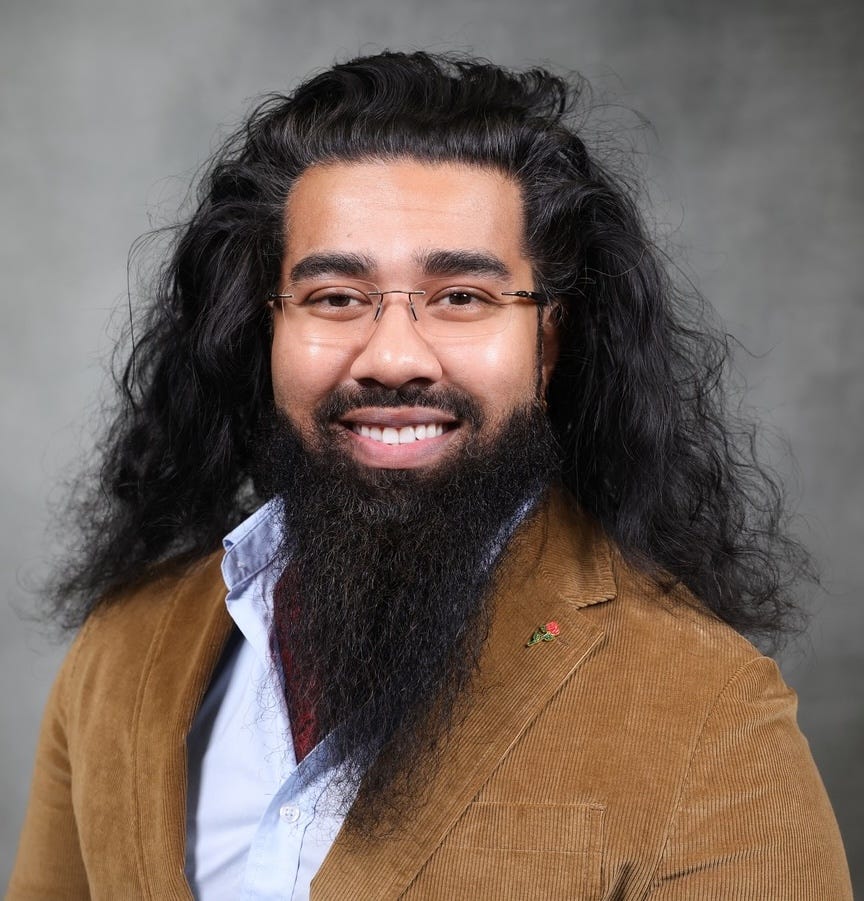
Dr. Nafees Alam is a professor of social work, holding a PhD from Yeshiva University, and is licensed in multiple states. His scholarship focuses on viewpoint and political diversity in higher education and the greater society. His previous articles for the JFBT were “Neo-White Supremacy and the Assumption of Black/Brown Inferiority,” “From ‘Masculinity Can Be Toxic’ to ‘Masculinity Is Toxic’,” and “‘Antiracism’ That Erases Black History.” He was a guest on the FBT Podcast in September of 2025. Follow him on Twitter/X.
I am surrounded by white liberals at work and some of the things they just say off the cuff are outright racist. Lowered expectations, hatred for those who don't align with their viewpoints, and bizarre forms of patronization are rattled off like bits of common sense. To be truly "anti-racist" actually means to be comfortable being called racist by white liberals for standing against judgement based on race. To expect people of color to hold their own communities responsible, overcome adversity, and excel based on merit is somehow racist, but lowering expectations for people of color based on their race isn't?
I wonder how invested Kendi and others are in their perspective intellectually and if they actually believe it, or are cynically hiding behind an ideology that guarantees them lucrative work in perpetuity.